Vamos WellnessGuides
Career guide
How to become a massage therapist on the Costa Blanca
Massage is one of the few wellness careers you can learn in a matter of months and practise almost anywhere — a hotel spa in Alicante, a beachfront studio, or your own treatment room at home. This is the honest version of how the path works, what separates real training from a weekend certificate, and how to take the first step this autumn.
Is massage therapy a real career?
Yes — and a surprisingly portable one. A skilled massage therapist is wanted in spas, gyms, physiotherapy clinics, hotels, and private practice, and the skill travels with you across borders in a way few professions do. On the Costa Blanca specifically, a steady flow of residents, expats, and visitors keeps demand for good hands high all year.
It also suits people arriving from another life. Many of the strongest therapists start as career-changers — someone who wants work that is human, physical, and meaningful after years behind a desk. You don’t need a sports-science degree to begin. You need commitment, good instruction, and enough supervised practice to build real confidence.
The path, step by step
Stripped of marketing, becoming a competent massage therapist follows four honest stages. Any good training — including ours — is really a structured way of moving you through them.
- Foundations first. Anatomy, physiology, hygiene, contraindications, and professional ethics. This is the theory that keeps clients safe and tells you when not to treat.
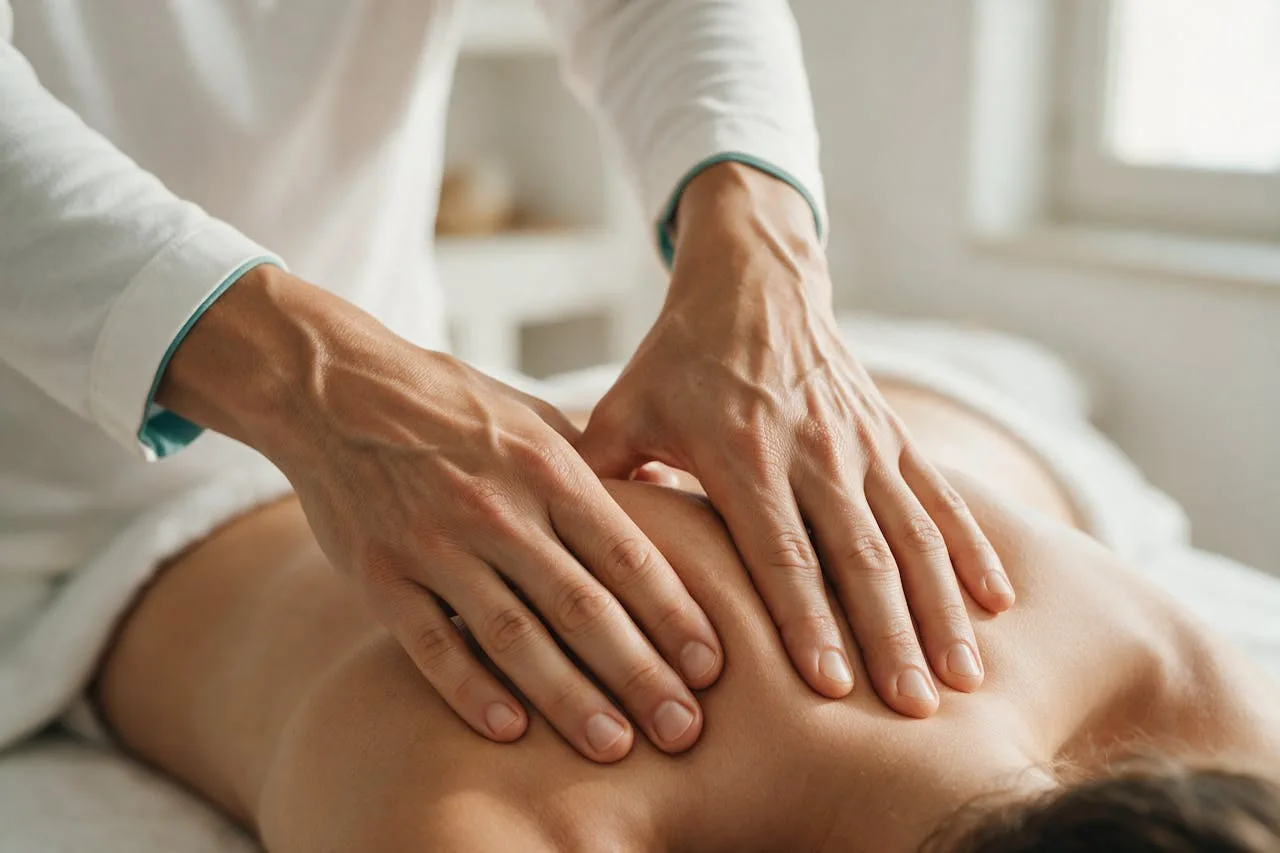
- Hands-on technique. Classic full-body massage — the strokes, pressure, rhythm, and body mechanics that protect your own hands and back over a long career.
- Supervised practice. Real bodies, real feedback. This is where technique becomes skill, and it is the part cheap courses skip.
- A documented portfolio. Proof you can actually do the work — a record of treatments you’ve given, reviewed by someone qualified before you charge your first client.
What good training actually includes
The massage market is full of weekend certificates that leave graduates unable to give a confident full-body treatment. Before you pay for any course, check that it includes all of the following — if it doesn’t, you’ll be paying again later to fill the gaps.
- Grounding in anatomy and physiology — not just choreography.
- A complete classic full-body technique, taught by someone who practises it.
- Meaningful supervised, hands-on hours — with feedback, not just observation.
- Hygiene, safety, consent, and contraindications treated as core, not footnotes.
- A real assessment, so your certificate means you were tested, not just present.
- Something tangible to show clients and employers when you finish.
Why the Costa Blanca is a good place to train
Vamos is based in Orihuela Costa, on the southern Costa Blanca — a stretch of soft, sandy beaches, an easy climate, and one of Europe’s most international communities. English, Spanish, and Scandinavian residents live side by side, which means an unusually broad market for wellness treatments and an easy landing for international students who don’t yet speak fluent Spanish.
Training here also means learning in the kind of setting you’ll want to work in: warm, unhurried, close to the sea. It’s a place people travel to in order to feel better — which is precisely the service you’re learning to give.
How Vamos Massage teaches it
Our Intensive Massage Course is built around the four stages above, compressed into a format that works for busy people and international students. It runs in three steps:
- Guided theory from home (~24 hours). You build your anatomy, safety, and technique foundations before you arrive, at your own pace, with materials prepared by Christina Midtbo, who leads the theoretical side.
- Three on-site days on the Costa Blanca (29–31 October 2026). Hands-on technique and supervised practice with Oli, our lead on-site instructor, plus a short exam (theory and four case studies) and a full-body massage you plan and deliver yourself.
- A post-course portfolio. Ten documented massages and a short film you submit for review — and once it’s approved, your Vamos Wellness diploma is issued.
The first cohort is deliberately small — ten seats — so every student gets real attention on the table. Founding students train at €799 instead of the regular €1,499; it’s the lowest this course will ever be offered.
What you’ll be able to do afterwards
By the end you’ll be able to plan and deliver a safe, confident full-body massage, adapt it to different clients, and show a documented portfolio of your work. That’s the foundation for taking private clients, working in a spa or gym, or adding hands-on treatment to an existing wellness practice.
One honest note on credentials: you earn a Vamos Wellness diploma — a certificate we issue that documents the theory, supervised practice, and portfolio you complete. It is not a state or federation accreditation, and we don’t pretend otherwise; independent accreditation is a goal we’re working toward. What earns your first clients is demonstrable skill — which is exactly what this course is built to give you.
Common questions
Do I need prior experience?
No. The course is built for committed beginners — the guided self-study puts your anatomy and safety foundations in place before the hands-on days.
How long does it take to become a massage therapist?
With Vamos the structured part runs over roughly a month: about 24 hours of guided theory from home, three on-site days (29–31 October 2026), and a post-course portfolio you complete at your own pace before your diploma is issued.
Is the course accredited?
You earn a Vamos Wellness diploma — a certificate we issue documenting your theory, supervised practice, and portfolio. It is not an external state or federation accreditation; independent accreditation is a goal we are working toward. For your first clients, demonstrable competence matters most, and that is what the course and portfolio are designed to build.
What does it cost?
Founding students train at €799 instead of the regular €1,499. It is the lowest price this course will ever be offered at — our thank-you to the first cohorts.
What if I do not pass the exam?
You get personal guidance to get there — our goal is to carry you through, not to trip you up. Exact examination details are confirmed before the course starts.
Your next step
Start this October
Ten seats, three days by the sea, and a founding price that won’t return. If you’ve been waiting for the right moment to learn massage properly, this is it.